
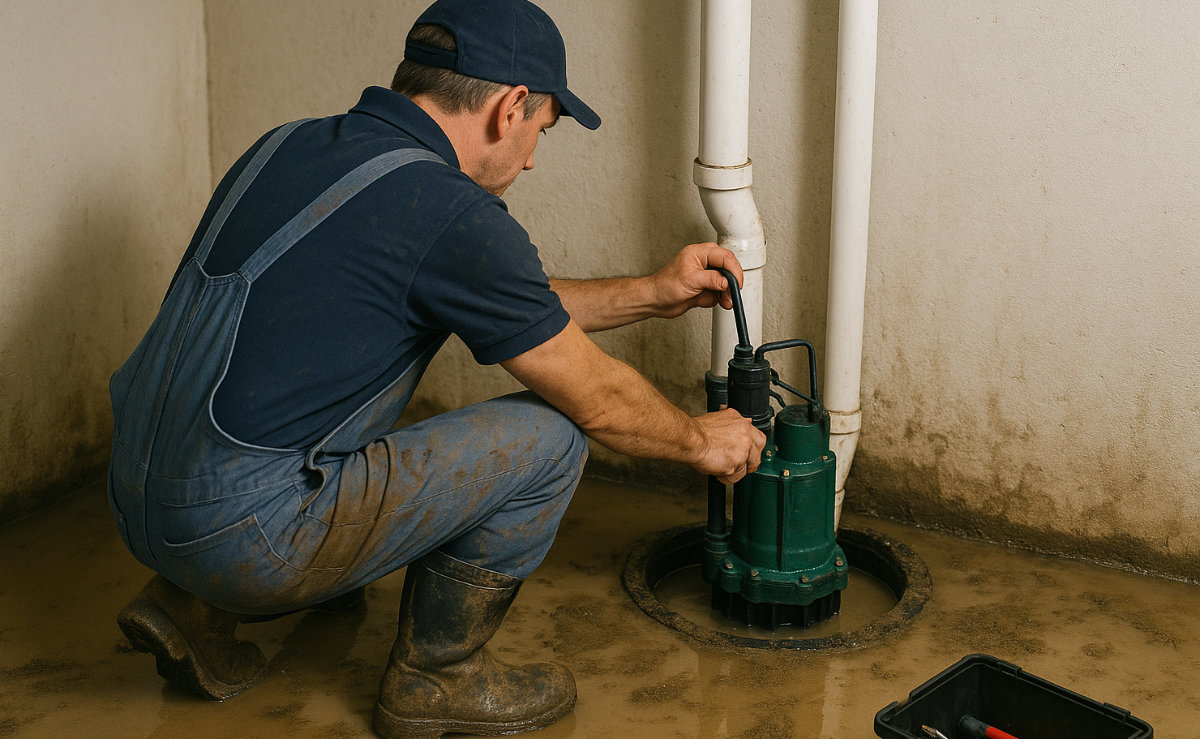
If your sump pump suddenly refuses to turn on, it can send a wave of panic through any homeowner. When the basement is at risk of flooding, the last thing you want is silence from the one device designed to protect your home.
We’ve seen this situation many times while helping Oregon and Washington homeowners. The good news is that not every sump pump problem means a full replacement. Sometimes it’s a small issue you can identify and fix quickly with the right know-how. Let’s walk through some common sump pump troubleshooting steps to help you figure out what’s wrong and get your system running again.
1. Start with the Power Supply
It may sound obvious, but the first step in troubleshooting any sump pump that won’t turn on is to check its power source. Many homeowners call for help only to find the unit simply wasn’t getting electricity. Since most sump pumps rely on consistent power, even a minor disruption can shut the whole thing down.
Here’s what to do:
- Check the outlet: Make sure the pump is securely plugged in and the outlet is working. Try plugging in another device to test it.
- Reset the circuit breaker: A tripped breaker is one of the most common culprits. Reset it and see if the pump kicks on.
- Inspect the power cord: Look for any frayed or damaged sections that might interrupt power.
- Test the GFCI outlet: If your pump is plugged into a Ground Fault Circuit Interrupter, press the reset button to restore power.
If none of these steps restore operation, you might be looking at an electrical issue inside the pump or the outlet itself. In that case, it’s best to call a licensed technician for sump pump repair rather than risk an electric shock.
2. Inspect the Float Switch
If your pump has power but still won’t activate, the next suspect is the float switch. This small but crucial part detects the water level in the pit and tells the pump when to start and stop. When the float gets stuck or misaligned, it can prevent the pump from turning on altogether.
Common issues with float switches include:
- Debris buildup: Dirt or mineral deposits can cause the float to stick in place.
- Obstructions: Cords or objects inside the pit can block the float’s movement.
- Worn-out switch: Over time, the switch mechanism can simply wear out and need replacement.
Try lifting the float manually to see if the pump turns on. If it does, you’ve found your problem. Keeping the sump pit clean and free of clutter is the best way to prevent float-related issues in the future.
3. Examine the Discharge Pipe
Even if your sump pump seems fine internally, a blocked or frozen discharge pipe can stop it from working correctly. The discharge line carries water from your basement to the outside of your home. If it’s clogged, the pump may sense back pressure or simply refuse to run.
Here’s what to check:
- Ice or frost buildup: In colder months, freezing can block the line.
- Debris or mud: Leaves, dirt, and small stones often get lodged inside the pipe.
- Improper grading: If the pipe slopes back toward the house, water may flow the wrong way.
- Check valve malfunction: A broken valve can let water flow backward, making the pump work harder or stop entirely.
If you find an obstruction, clear it carefully. You might also consider adding a grated cover or extension to prevent future clogs.
4. Test the Motor and Impeller
If the power is fine and the float switch isn’t the issue, the problem could lie inside the pump itself. Both pedestal sump pumps and submerged sump pumps rely on a motor and impeller to move water efficiently. When either of these parts gets jammed or burned out, the pump will stop working.
You can perform a quick test by pouring a bucket of water into the sump pit. If the float rises and you hear a humming noise but no water movement, the impeller may be jammed by debris. In that case:
- Unplug the unit and remove the cover.
- Check for small rocks, dirt, or sludge around the impeller.
- Clean the area gently, avoiding harsh tools that could damage the blades.
- Plug it back in and retest.
If the motor makes no sound at all, it might have burned out. That’s typically a job for a sump pump service professional. Replacing or rewiring internal components requires experience to ensure safety and proper performance.
5. Check for Overheating or Age-Related Wear
Sump pumps aren’t designed to run constantly. If your area has experienced heavy rainfall or groundwater issues recently, the motor may have overheated and temporarily shut off. Most units include a thermal overload protector that turns the pump off before serious damage occurs.
Wait 15 to 30 minutes, then try running the pump again. If it starts, it was probably just overheated. However, frequent overheating is a sign that your pump is overworked or nearing the end of its lifespan.
A few signs your pump might be aging out include:
- Frequent cycling on and off, even when water levels are steady.
- Strange noises like grinding, rattling, or humming.
- Visible rust or corrosion on the housing or components.
- Reduced water flow compared to when it was new.
Most sump pumps last about 7 to 10 years. If yours is older than that, it may be time to schedule a sump pump replacement before it fails completely.
6. Evaluate the Backup Power System
Many modern sump pumps come with battery backup systems or water-powered backups. These features are lifesavers during power outages but can fail if the battery is dead or the connection is faulty.
Start by checking the battery’s charge and condition. If it’s more than three years old or shows signs of corrosion around the terminals, it may no longer hold a charge. Some systems have a small indicator light that flashes when the battery needs replacement.
Also, make sure the backup switch is in the correct position. If it’s stuck between modes, the system might not know whether to run on battery power or electricity. Keeping the backup system in good shape ensures your pump keeps working even when the lights go out.
When DIY Fixes Don’t Always Work
Sometimes, no matter how many steps you take, the sump pump still refuses to cooperate. At that point, it’s time to call in professionals who can safely diagnose electrical or mechanical problems. Trying to fix your sump pump beyond simple checks can risk damaging the system, or even injuring yourself.
A qualified plumber can inspect the wiring, check for hidden blockages, and test electrical continuity to pinpoint the issue. In some cases, they might recommend replacing the pump altogether if repair costs would exceed the value of the unit.
Preventing Future Sump Pump Problems
The best way to avoid future sump pump headaches is through regular maintenance. Just like any other household appliance, your pump needs periodic attention to keep running smoothly.
Here are a few simple maintenance habits that go a long way:
- Clean the sump pit every few months to remove dirt and debris.
- Inspect the float and switch regularly to ensure free movement.
- Flush the discharge line to prevent buildup and freezing.
- Schedule professional maintenance at least once a year.
Many Oregon and Washington homeowners also choose to install a water alarm in their sump pit. This handy device alerts you if water levels rise unexpectedly, giving you a heads-up before things get serious.
Sump Pump Giving You a Headache? Call the Professionals at Henco Today!
If your sump pump refuses to turn on, or you’re just not sure what’s wrong, we’re here to help. At Henco Plumbing Services, we specialize in sump pump repair and maintenance for homes across Portland, Salem, Ridgefield, and Vancouver. Whether you have a pedestal or submerged system, our team can quickly diagnose the problem and get your pump back to protecting your home.
We pride ourselves on fast response times, clear communication, and quality workmanship. Flooding doesn’t wait, and neither should you. Call Henco Plumbing Services today for expert sump pump service and enjoy the peace of mind that comes with a properly working system.